Sunday, November 8, 2015

Capezio Airess pointe shoe review


Several months ago, Capezio released their newest innovation in pointe shoes: the Airess.  Murmurings surrounding this “next big thing” flew for almost a year before local and online dancewear retailers and began carrying the Airess in the summer of 2015.  Now that the Airess has been widely available for about 5 months, I have enough information to give you my well-formed and honest opinion.

(Note: I have not purchased or danced extensively in Airess pointe shoes.  I have thoroughly examined and tried them on in the store, and I have done some simple exercises like bourees and eleves in the shoes.  I have seen about 5 different dancers at my ballet school purchase the Airess and have the same issues with the shoes.  I am using this information along with my personal observations to make somewhat general statements that I believe apply to the shoe in general.  It will become clear that I am not a fan of the Airess.  If you like the Airess, I do not mean to disrespect you or your choices.  I am expressing my opinion as well as pointing out factual problems from the point of view of a dancer and shoe fitter.)

Let’s start with some basic specs.  The Airess is supposed to be the culmination of “Russian” and “American” innovation in the “perfect” pointe shoe.  The shank is made of compressed particle board and balsa wood (yes, this is the exact shank that can be found in Russian Pointe shoes).  The drawstring and casing are elasticized for a smoother line (a very “Capezio” trait in a shoe).  The shoes are also lined with a suede-like material that is supposed to help the shoes not slip on the heels (this trait is taken from Bloch’s stretch European).  The wing is medium to high, and the crown is relatively high.  These factors severely limit the types of feet that can comfortably wear the Airess, even though there are supposed to be options for every dancer.

As far as sizing goes, The Airess comes in sizes 4- 12.  Dancers should go up about 1.5 sizes from street size to find the correct Airess size (Usually Capezio requires going up about 1 size, so the Airesses are running small.  Capezio’s website tells dancers to order their street size; this is not a good recommendation.  Go one size up for no or very thin toe pads, 1.5 sizes up for thicker toe pads, and 2 sizes up for wide square feet with normal to thick toe pads).  The smallest available size (4) fits approximately a children’s size 13.5 or 1 foot.  I (size 5.5 ladies) felt most comfortable in a 7.  Dancers with feet larger than a ladies’ size 10 will probably not be able to wear the Airess.

There are a lot of other options to choose from when fitting the Airess.  The shoe comes in “tapered” and “broad” toe options (noted as TP for tapered and BT for broad).  These can be generally applied to tapered and square feet respectively.  The “tapered” option is similar to a Russian Pointe Entrada(quite tapered with a smaller platform), and the “broad” option is somewhat like a Bloch Seranade (a bit tapered with a larger platform).  However, in my opinion, there is not a huge difference between the toe shapes.  I don’t think it’s really necessary to have both toe options since the shoes also come in narrow, medium, and wide widths (noted as N, M, and W).  There is a pretty obvious difference between a narrow tapered and a broad wide, but the combinations in between can really look and feel the same. (Note: in pictures of the shoe on their website, Capezio uses a tapered Airess.  Even in places noting broad, the picture is of the tapered version of the shoe.)

In addition to toe and width, the Airess also comes in 3 different shanks that can be called soft, medium, and hard (noted flexifirm or 5.5 for soft, firm or 6.5 for medium, and  maxifirm or 7.5 for hard).  “Soft” is supposed to be the same as a Capezio Tiffany 126, and “medium” is supposed to be the same as a Capezio Tiffany Pro 128.  I think that in reality all of the shanks are harder than they are supposed to be, so “soft” is more like a typical Capezio medium, and “medium” is more like a typical hard.  “Hard” is very hard and should only be used by advanced dancers or others who need a super hard shank.

Because the crown is high, the wing is medium/high, and the shank is pretty hard, the Airess is a very poor option for young, petite, beginning point dancers, or those with narrow tapered feet.  Anyone who prefers a soft shank, low crown, or low wing will not find an ideal shoe in the Airess. 
The platform and pleating area (the Airess is pleatless) are very rounded to the point of being bulbous.  This is supposed to assist with roll-up and stability.  In reality, it does not.  Most dancers, especially beginners, are held back by this feature.  Dancers get “stuck” in roll-up and cannot get all the way up on the platform.  The bulbous look is also really not aesthetically pleasing; it makes the feet look chunky.  The Airess is also a relatively heavy shoe, which can be tougher to work with (especially for small or beginning pointe dancers).

Some of my friends at my ballet school have purchased the Airess and worn it in class and at rehearsal (5 dancers total).  Every single one has noticed a very fast breakdown of the platform of the shoe.  It has become squishy (and I mean severely squishy and unsupportive, like a dead Freed) after about 3 or 4 hours of wear.  Pointe shoe glue can repair some of the damage, but nothing can completely bring the platform back to its original supportive form.  Since this has happened to multiple dancers on multiple occasions, I believe that it is a widespread problem.

Overall, I am very disappointed in the Airess. This “next big thing” has turned out to be “no big deal.”  I would not recommend this shoe to any dancer.  The shape is poor for narrow feet, and it exacerbates the “chunky” look of wide square feet.  The hard shanks may be nice for advanced students who frequently kill shoes, but the weak platforms completely nullify any benefits to shoe lifespan.  Many dancewear stores bought large quantities of the Airess because of its buildup as the “next big thing” in pointe technology.  If you go for a fitting, be prepared to be offered the Airess.  Try it on and see what you think for yourself, but I would not purchase a pair. 

If the Airess seems like it would be a good fit for you, see if you can also try a Russian Pointe Rubin (most of my friends who have tried the Airess have found more satisfaction with the Rubin).  This shoe has a generic semi-tapered fit that can work for many foot shapes, and with 6 width, 3 vamp, and 3 shank options it is as customizable as the Airess.  The Rubin is sleeker, has a more stable platform, and has a much longer lifespan that can be easily elongated with pointe shoe glue.
I can see what Capezio was trying to accomplish by combining the best of American and Russian pointe shoe designs.  However, all the pieces of the design did not come together in a great way.  Unfortunately, this one is kind of a flop.

Sunday, October 18, 2015

Dancewear trend: patterned leotards


Leotards with patterns on them (or areas of patterned fabric) are currently popular choices for ballet and jazz.  If you attend a dance school with a relaxed dress code, patterned leotards can be a great way to show your colorful personality while wearing tight fitting attire that makes it easy to see the lines of your body.  Pieces with patterns tend to be a little pricier than their plainer counterparts, so make sure you love the leo before you buy it.  More subdued patterns (like those from Mirella and Ashley Bouder) tend to keep their fashionable status for longer periods of time than brighter ones that may be "out" next season.

If your studio has a stricter dress code, you can still get the patterned look by choosing leotards with embroidered or mesh burnout patterns in black or solid colors.  You can also pair a patterned skirt or top with your plain leo for a milder dip into the patterned trend.

Thursday, October 8, 2015

What should I wear to my adult beginner ballet class?


Ballet is a great way to stay in shape and have fun.  Most dance studios offer adult classes at beginner and intermediate/advanced levels.  Whether you have a child in dance or you are just looking for a fun exercise class, ballet can be an awesome choice.  

Don't let the fear of looking weird in a leotard keep you from signing up for class.  Usually leotards are not required.  If you are new to dance and don't own any dancewear, simply wear tight fitting exercise clothes like leggings or yoga pants (think lululemon's tight fit) and a top that fits close to the body.  You will probably be jumping and doing some aerobic movements, so wear a sports bra if you feel you need the support.  Male dancers can wear a close fitting t-shirt (avoid shirts with big logos or pictures) and sweat pants or long athletic shorts.  If you don't have ballet shoes, wear thin athletic socks to your first class.  Most teachers are ok with this as long as you get some ballet shoes for subsequent classes.  

If you want to get some dancewear, I recommend choosing styles that are modest and comfortable.  Tank, short sleeve, and long sleeve leotards come in various styles that look nice and can hide a bra if you feel like you want to wear one.  Black footless tights or ankle-length black leggings are more opaque than the pink tights most younger students wear, so they can make you feel more covered.  A dance skirt (wrap or pull-on, above the knee length) or a pair of warm-up shorts can round out your look and provide some extra coverage.  Male dancers can look into getting jazz pants, tights or leggings, and dance shirts, but any exercise wear will always be appropriate for class as well.  

When you get ballet shoes, first consider whether or not you want to wear them with tights.  If you prefer footed tights or wearing your convertible tights "down" over your feet, get shoes in the same color as your tights (black shoes with black tights, etc.).  Especially if you wear black footed or convertible tights, do not get pink or nude shoes.  It does not look good.  If you wear footless tights, choose ballet shoes in any color you like.  

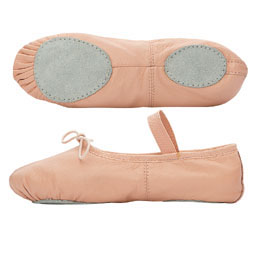
The most important thing about ballet shoes is the fit.  For an adult, I recommend choosing split sole ballet shoes in leather or canvas.  Avoid imitation leather if possible.  Leather and canvas stretch and mold to the foot after some wear, so you need to have shoes that are snug to the foot.  Workers at your local dancewear store can help you find a good fit.  Make sure the shoe does not gap at the sides and there is not extra room at the toe of the shoe.  The shape of your big toe should be visible through the material, and you should feel the end of the shoe with the tip of your toe (but it should not "squish" your toes or hurt).  This may be tighter than you are used to, but it will really help you dance your best.

Friday, October 2, 2015

Happy Breast Cancer Awareness Month!

As you all know, October is breast cancer awareness month.  I did a photo shoot with Grishko's pink ribbon warm up line to bring some awareness through the beauty of ballet.  Some of the other photos are on Instagram (follow me @dancejcupp01).  

Remember that even healthy athletes are at risk for breast cancer.  Self exams and regular medical testing can save lives.  Dance is a great way for breast cancer survivors to exercise, socialize, and have fun while sharing their stories.  Remember to "think pink" every time you pull out your pointe shoes!

I hope you enjoy the photos; I did my own editing for the first time.  Good luck with the start of your Nutcracker rehearsals!  I've been busy with mine.  Regularly scheduled programming will be back next week!

Wednesday, September 23, 2015

What should I wear to my first ballroom lesson?

Dress codes for ballroom studios differ from place to place. If you have never taken a ballroom lesson before, it can be difficult to pick the perfect outfit. Whether you are learning a wedding dance or picking up ballroom as a hobby, you can follow these basic principles to make sure you are wearing appropriate clothing.  (Note: many studios allow casual dress, in which case the guidelines listed here are not really applicable.  Following them may make you feel too dressed up.  However, some studios are incredibly strict and won't allow dancers to set foot on the floor unless they are dressed appropriately.  I created these guidelines with a stricter studio in mind so dancers are better safe than sorry.)


Think of a ballroom dance studio like a casual theater, office job, or church. You want to wear something slightly dressed up, but obviously casual and athletic enough to move around. Do not wear jeans unless you already know that the studio allows dancers to wear them. 

Many studios do not allow jeans both because they are too casual and too hard to dance in. Men should generally wear slacks or khakis with casual or athletic style shirts tucked in (with or without a belt). Avoid cotton t-shirts (they show sweat) and anything with large pictures or logos (small "polo man" and similar is ok). 

Women can follow the same principles as men, but skirts and dresses are good too. Just make sure all skirts are knee length or worn over athletic shorts or leggings.  Always wear briefs or bootie shorts under skirts, even if they are longer.  Any casual or athletic top is acceptable, but try to wear a top with at least wide tank straps and no lace or crochet detail (your partner can get his/her hands tangled). If you are not wearing leggings with your skirt, any nude or black tights or hose including fishnet tights is acceptable. It's also ok to go bare legged, just be sure to put on lotion before you leave the house. Do not wear jewelry (small earrings and rings are ok). 

It is also completely acceptable for men and women to wear dancewear such as jazz pants.

For footwear, bring any type of dance shoe you already have (ballet technique shoes, jazz shoes, dance sneakers, character shoes) and wear those for your first lesson. If you don't have any dance shoes, you can probably get away with dancing in dress shoes with slick (fabric or leather) soles or in socks.  If you dance in socks, make sure they are black or gray with no logos or designs so they look professional. The most important thing is for you to be able to control your feet as you glide and turn, so socks are often a better choice than rubber soled shoes or wobbly high heels. 

If the studio requires dance shoes for all dancers, even for the first lesson, pick up some character shoes from the dance store. These shoes come in men's Oxford and ladies' Mary Jane styles and have hard leather soles that accommodate many styles of dance as well as street wear.  

Whatever you decide to wear on your body or your feet, make sure you are comfortable, able to move, and feeling confident. 

Monday, September 14, 2015

When should a child move to split sole ballet shoes?


People have various beliefs as to when children should move from full sole to split sole ballet shoes.  Full sole shoes support the foot and provide more resistance, which strengthens the muscles.  It is recommended that all young children start in full sole ballet shoes.  I suggest that children should move to split sole shoes when they begin to wear adult shoe and clothing sizes, graduate from elementary school, or begin pre-pointe level classes.  For many children, these things tend to happen around the same time, at about age 10 or 11.  Waiting until this age ensures the child has muscles developed enough control the structure of split sole shoe.  Also, at this age, children can handle the tighter fit that is necessary for split sole shoes to properly form to the foot and create a more attractive foot shape.

Tuesday, September 8, 2015

How to wash dancewear

How you wash your dancewear depends greatly on what kind of items you need to wash.  The material and shape of the garment need to be considered before you start washing it.  In this post, I will give some basic guidelines of how to wash different dancewear items so they maintain their color, shape, and size.

--Dancewear that is similar to streetwear or exercise wear (such as jazz pants, men's tights, t-shirts, and shorts made of nylon/spandex and cotton blends) can be washed and dried in the washing machine and dryer like regular workout clothes.  Wash the garments on a regular cycle (high or heavy cycles are usually ok, especially if the clothes are very sweaty/dirty) in cold water (prevents color bleed) with your normal detergent.  Do not use fabric softener, as it can make the material less breathable.  Dry the dancewear on a light or gentle cycle. The materials they are made of usually do not take long to dry.  It is possible for the heat of the dryer to shrink the garments slightly, but they stretch back to their original sizes when worn again.  If the shrinkage bothers you a lot, simply wash the items in the washing machine and lay them flat to dry.

--Leotards should be cared for in a similar manner to swimwear.  If they are made of nylon/spandex or cotton blends, wash the leotards in the washing machine in cold water (prevents color bleed) on a medium to gentle cycle, then lay flat to dry.  Most leos have a line of elastic sewn into the leg and arm holes.  This elastic can melt or become brittle in the dryer, especially industrial laundromat type dryers (so if you are at a summer intensive doing laundry in a laundromat setting, DO NOT put your leos in the dryer).  If your leotard has delicate lace or mesh details or beading, hand wash it or wash in the washing machine on the gentlest cycle and dry flat.

--Women's dance tights can be washed in the washing machine in cold water on a gentle cycle.  Try to wash only tights by themselves if you can, as light colors tend to turn gray if they are washed with other items such as jeans.  If you do wash tights with other items, make sure none of those garments have zippers or other metal details that could catch on the tights.  Lay tights flat or hang them to dry.  If you put tights in the dryer, they tend to pill and then get runs where the pills are.  If your tights have runs in them, seal the ends of the run with nail polish and let it dry before you wash them; runs can get worse while the tights are in the washing machine.  If you have specialty tights made of lace or very cheap/not well made fishnet tights, hand wash them to avoid tearing the material.

--Chiffon, nylon/spandex, or soft jersey dance skirts can be washed on a regular cycle in the washing machine.  If the skirt has a tie, be careful of the tie getting caught on things or being "eaten" by the mechanisms in the machine.  Chiffon and nylon/spandex skirts can be dried on a gentle cycle in the dryer.  Lay soft jersey skirts flat to dry; putting them in the dryer will shrink them.

--Knit warm-ups such as legwarmers and shrugs made of acrylic can be washed and dried in machines on gentle cycles.  If these items are made of wool, rayon, cashmere, or angora (or if they contain a small percentage of any of these materials), wash them in the washer on a gently cycle and dry them flat.  Shrugs made of mesh or lace should be hand washed and dried flat.  Trash bag shorts and pants can be washed and dried on regular cycles, but they tend to get static in the dyer.

--Specialty dancewear like tutus, costumes, and ballroom dresses with fringe or beaded detail should be dry cleaned.  Tutus can be sprayed with antibacterial febreeze to make them fresher between uses.


If you need advice on how to clean a particular item, comment below and I will do my best to advise you.